

Handling Sales Objections
This article previously ran in the November/December 2020 issue of PS Magazine.
Sales objections can be daunting for even the most seasoned salespeople — merely hearing the word “objection” can create a feeling of disapproval or opposition. The cost of objections is significant; in addition to delivering a direct hit to your bottom line, objections can impact your reputation as a trusted vendor. If your customers learn they can expect a discount then they throw out an objection, this will affect sales revenues and diminish the true value of your products and services. Objections can come in many forms, and it’s important for all salespeople — regardless of experience or tenure — to properly prepare for them. This article explores how all salespeople can identify and respond to them.
Objections During the Buying Journey
First and foremost, bear in mind that buyers don’t go to objection school; they don’t have a script they pull from just because they feel like disrupting a sales cycle. In most cases, objections are very real to the buyer and will need to be addressed before it is possible to move through the sales process. When thinking about your sales cycle and the typical buyer’s journey, it is vital to identify the point at which the objection surfaces. Determining the precise point where the sale breaks down can help you develop a solution. Specifically:
• If you are finding that most objections occur at the beginning of the journey, it’s likely you haven’t painted a clear picture of the opportunity that exists with your solution. Your prospect is not thinking about the benefits of your offering or why they need it.
• If objections are commonly presented in the middle of the process, this is usually because the buyer’s concerns are not being addressed. It’s also possible they need help quantifying the value of your solution.
• If most objections seem to surface toward the end of the cycle, this could be an indication that the customer has lost sight of the value of your solution and has instead become overly focused on potential risks or price.
Ultimately, unresolved objections will cause the prospect to question why they should buy from you — or if they even need to buy something at all. Before we can effectively address the most common sales objections, we must first develop an understanding of the buyer’s journey. Figure 1 maps the buyer’s journey from status quo through negotiation and purchase, providing examples of common objections and where in the cycle they typically occur.
Figure 1: Objections During the Buying Journey
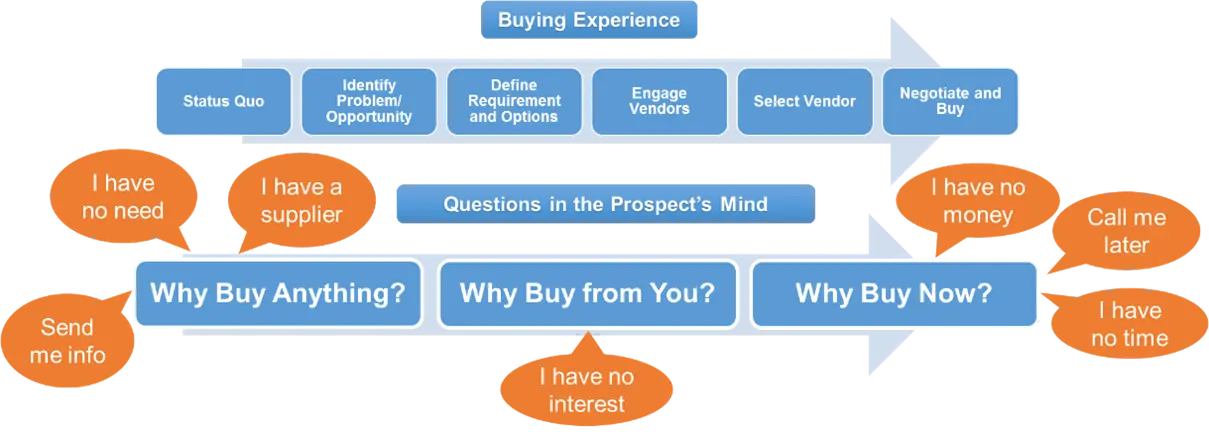
Despite their negative connotation, objections are not necessarily a bad thing. In fact, some objections actually signal the customer is interested but simply not ready to buy. Objections are very common, so developing a strategy for handling them should be an integral part of your sales process. The best way to handle an objection will depend on where you are in the sales process. Understanding the possible reasons for any objections can make it easier to overcome them and ultimately close the deal.
Handling and Responding to Sales Objections
So, how do you respond to sales objections? Although having a script in hand that can help you quickly manage customer objections may seem like a great idea on the surface, contrived and canned responses might make you appear disingenuous and inexperienced. In addition, bear in mind that you are a service provider; if you can’t properly address a simple objection, it will be difficult to earn the trust of your customers and prospects.
Although discounting is clearly not the best solution, relying on an “objection handling script” will quite frequently fall short of addressing the customer’s real concerns or barriers to purchase. Before you can effectively respond to an objection, you must first be able to identify the type of objection you’re dealing with. For the most part, objections will typically fall into one of three categories: Legitimate, Uninformed or Avoidance. Each of these objection categories will generate a different response, yet the objection-handling process will remain the same in every case.
Figure 2: The Objection-Handling Process

To effectively deal with all objections, salespeople must follow a process that includes each of the following steps:
• Listen: When you are listening to your prospective client’s objection, make sure you are actually hearing what they are saying and not just thinking about how you are going to respond. Is the prospect saying they think your solution is great but they don’t have much need for or interest in what you are selling? Maybe they have more pressing projects and just don’t want to commit right now. Or perhaps they are using one of the most common objections, which is telling you that your prices are too high when really they don’t have the budget required to make the investment.
• Pause: Once you have heard your prospect’s objection, you may be tempted to instantly launch into a rebuttal. A better approach is to take a step back, pause and think intently about the opposition. Do they have a legitimate concern? Do they need more information? Or are they trying to avoid deciding at all? By taking the time to think about what your prospect has said, you’ll be better positioned to clarify the objection.
• Clarify: Clarifying the objection is an important step because it gives you the opportunity to demonstrate that you understand what the prospect has said and are genuinely interested in their concerns. Defining and clarifying the objection improves impulse control, which can help curb the urge to blurt out a well-rehearsed response. During this stage, you can also request additional information or a more thorough explanation to gain the insight you need to minimize or eliminate their concerns.
• Solve: The next step in effectively managing a sales objection is to solve the problem and seek a resolution. During this step, take the opportunity to educate the prospect and clear up any misunderstandings. By asking a series of well-thought-out questions during this stage, you can help the prospect grasp the importance of your solution. Afterward, the prospect may begin to see your offerings in a more positive light.
• Confirm: The final step in the objection-handling process is to confirm that you have addressed and resolved the objection, as well as your prospect’s concerns. This stage of the process serves multiple purposes. For starters, it’s the best way to verify that you accurately understood the objection, as well as gain assurance that you can now move the sales process forward. It also enables you to establish your strength as a sales professional, demonstrates your attention to detail and highlights your commitment to your customer’s happiness. Once you have solved the concern, don’t get so excited that you overlook this crucial step.
The Bottom Line
By properly preparing yourself for objections, you can close deals while resisting the temptation to offer discounts that will negatively affect your top and bottom line. Think of it this way: What would your business look like if you were able to raise your prices by 5% across the board? Pretty good, right? It’s natural and instinctual to consider offering a discount when you encounter an objection, but there’s a better path. Remind yourself that implementing and adhering to a logical objection-handling process can generate results that are very similar to a profitable price increase.
The best approach for managing objections is to anticipate and minimize them before they occur. Objections cannot be avoided; they are an inevitable part of the sales process. Handling them correctly takes practice, and the process involves active listening, discipline and patience throughout your sales efforts. It may seem daunting to transform your objection-handling approach, but it’s well worth the effort, and the results can be dramatic. Overcoming objections the right way can help you foster relationships with satisfied and profitable customers that will keep coming back for more.
Preparation is critical, so do your research and look at your sales cycles objectively. A sales process that flows smoothly with no objections is almost unthinkable, but better sales conversations will lead to fewer objections and ultimately better outcomes.
Karen Kimerer is the director of production services for Keypoint Intelligence – InfoTrends. She has experienced the many challenges of expanding current market opportunities and securing new business and has developed a systematic approach to these opportunities, addressing the unique requirements of becoming a leader in our changing industry.