

What’s New in Data-Driven Communication?
This article previously ran in the April 2020 issue of PS Magazine.
Data-driven communication sounds like the perfect idea — taking the information about how people purchase and using it to create more engaging customer communications. It’s called data-driven communication because it involves using information about the relationships between brands and consumers to inform what marketing messages are included in direct mail, on transactional documents, in pop-ups on the web or in notifications from mobile applications. The idea is to create a serendipitous moment for the recipient with an offer that seems to magically meet their needs at just the right time.
Making data-driven communication work in any channel requires more than having access to data. It demands data analysis and modeling to create that serendipitous moment. Nirvana would be seeing into every piece of data a business has about every relationship and then modeling that data to predict the next thing that might be purchased or the next transactional need with a high degree of certainty. An extension of nirvana would involve having access to databases from other companies to augment the data and create a more comprehensive picture. While all of this is possible, there are two challenges: the first is that most businesses lack the budget for comprehensive customer modelling, and the second is the growing amount of legislation designed to protect consumer rights. So what’s a marketer to do?
Start by rethinking data-driven communication. Print service providers and distributors of all sizes, and the constituents they serve, should be considering all of the ways data can be used to influence marketing communications. It’s more than just a database with names, addresses and perhaps some information on purchases. Smart marketing can leverage public data to create a serendipitous moment that is as powerful and intense as data-driven communication, without the challenges of using personal data.
Start With Modern Data-Driven Communication Techniques
The newest techniques in data-driven communication rely on the context of the marketing situation, including time of year and the nature of the product or service, augmented by anything from address to local and regional events, to create the best communication. This is a modern use of data-driven communication.
Modern data-driven communication is a basic enough technique — marketers from businesses of all sizes can use it to create printed and online communications that still provide that moment of serendipity. It starts with something to sell. If you are a distributor that is working on expanding into new areas, you might consider a direct mail campaign with an email follow-up that leverages a local event or something culturally relevant. Meanwhile, a distributor in Colorado might consider a campaign that is linked to the ski season. If you have a customer’s address, you have their ZIP code. This tells you how far the addressee would need to travel to enjoy the ski slopes. You might provide a map to your showroom and one to the nearest slope, perhaps offering a day pass or sending them off with a branded thermos of hot chocolate. All you need to create an intriguing marketing communication is the recipient’s location, your location and a seasonal offering.
If the idea of a map seems like it might be difficult to execute, remember there are companies that can help you with static, directional and contextual maps. Companies like LOCR even enable you to control design elements of the maps for color and typestyle. In the example in Figure 1, McNellie’s Restaurant was opening a new location and wanted to make it easy for customers to find them.
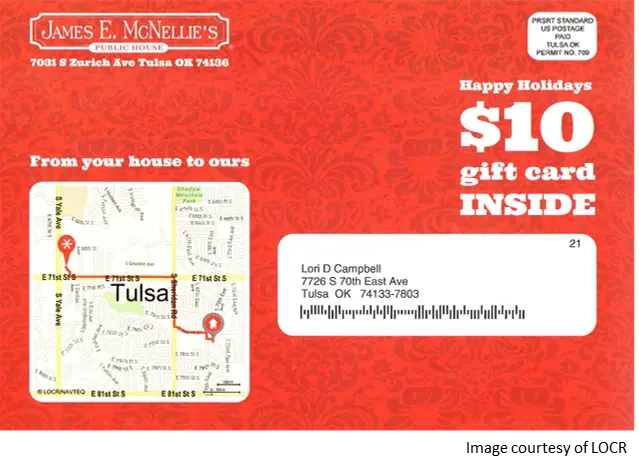
Figure 1: McNellie’s Restaurant Enables with LOCR
The key takeaway is that data-driven communication does not require large databases full of targeted data. Instead, it can involve developing a database from public information and using that information to format customized messages that intrigue recipients and encourage them to engage.
The Return of Communication Testing
As the economy cycles through its ups and downs, testing is an often-overlooked element of any good data-driven communication campaign. Although testing is not new, it’s being dusted off, rethought and re-launched. Like data-driven communication itself, testing does not need to involve a huge effort. It can be as simple as testing two or three ideas and building on what works over time.
If you take the path of simplified data-driven communication described previously, using simple variations to see what works for the campaign will build relevant knowledge of customer behaviors that are directly related to the product.
Let’s go back to the distributor in Colorado that was drawing people into its showroom and encouraging them to hit the ski slopes. Although using a map and an offer might bring people into the showroom, experimenting with several variations might provide some insights into what works best. Instead of focusing exclusively on skiing, consider two or three winter activities. Professional/amateur sports, recent movies, car shows, home décor shows, rodeos and racing could all provide a hook. You can test by sending different messages out over a period of time to see which hooks elicit the best response, or you could divide the mailings and see which group responds the quickest. Track the responses to build a deeper understanding of the types of messages that work for you.
Don’t Forget to Link Print and Digital
Another approach to data-driven communication that is gaining traction is linking print to online or app-based enhancement. If you’ve used QR codes in the past, you probably already know that they require upfront knowledge to create a unique 2D barcode. Additionally, while software solutions that design and enhance the QR code experience are becoming increasingly popular, there is an alternative.
Augmented reality (AR) can be added to any printed piece at any point in the process, including after the print design has been developed. Consider car dealerships that discover that the latest commercial for one of their brands has gone viral. That dealership might enable the next mailing to trigger that commercial on a recipient’s smartphone by working with an AR provider to identify an image that will trigger the link to an online video.
Data-driven AR uses a database to trigger unique experiences. Solimar Systems in San Diego enables this unique type of AR for its clients in insurance, banking, book publishing and other segments. Imagine sending out ID cards for insurance companies that can trigger an app on a phone using data-driven AR that fills in relevant parts of a claim form as part of mobile claims management. The same technique can work for everything from magazines and catalogs to point-of-sale marketing flyers.
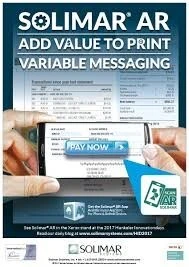
Figure 2: An AR Experience from Solimar
Although this might sound difficult, it isn’t. There are dozens of solutions out there, and one of them is bound to work for you. AR involves identifying a trigger image, which is usually all or part of a page of your print. It could be a logo, a graphic, part of an image or an entire page. The solution you choose will have a way for you to capture that image and map it to an asset. In this case, an asset might be a video, game or other experience that will launch when someone uses the AR application and focuses it on the trigger image. If you’re still unsure, most providers have video tutorials to walk you through the process.
Data-driven communication is constantly evolving, bringing new technologies to the tool kit. At the same time, it’s important to step carefully through your plans when they deal with data. You’ll want to ensure that you’re meeting data security obligations and complying with the rising tide of data protection laws. To play it safe, consider trying one of the techniques explored in this article to create data-driven serendipity without the compliance challenges.
Pat McGrew is a senior director of production solutions and services at Keypoint Intelligence – InfoTrends.